Level 3 Rail Engineering Design Technician
Curriculum Breakdown & Roadmap
Roadmap
Overview
“Provide technical support to engineers who design infrastructure and systems for railways.” - Skills England
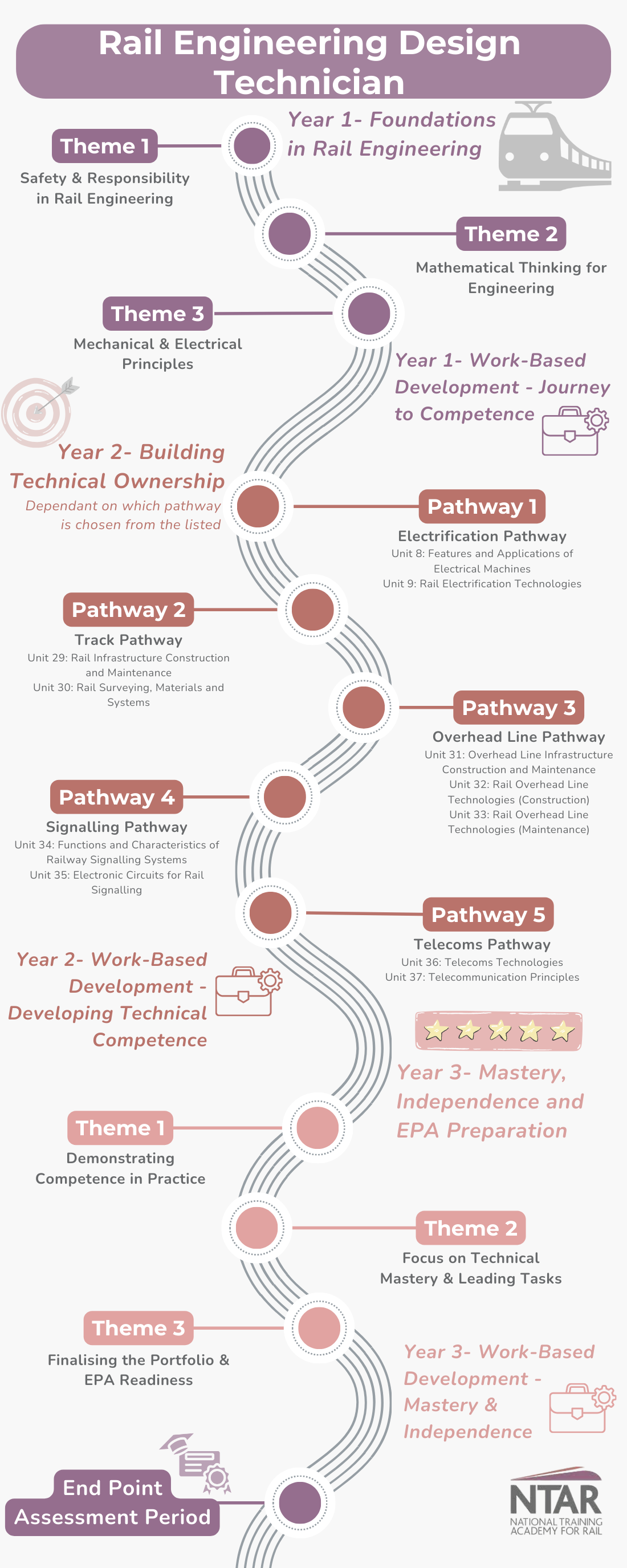
Year 1: Foundations in Rail Engineering
In Year 1, apprentices begin their journey by building core technical knowledge and safe working practices. Through themed learning, they explore health and safety, mathematical methods, problem-solving, and key engineering principles. CIAG is introduced to support career awareness and progression.
Work-Based Development:
Year 1 is about bedding into the workplace. Apprentices begin by observing experienced colleagues, understanding workplace culture, and gradually engaging in technical tasks. The emphasis is on confidence-building, safe working practices, and developing professional behaviours. Apprentices begin to gather evidence for key duties through structured exposure and supported practice.
Year 2: Building Technical Ownership in Rail Engineering
In Year 2, apprentices begin applying their technical knowledge to real-world systems. They will select one specialist pathway - Electrification, Track, Overhead Line, Signalling, or Telecoms - and follow the learning outcomes aligned to that route. Apprentices deepen their understanding of rail systems, support maintenance tasks, and use performance data to inform decisions. CIAG continues to guide career exploration, with roles such as technician and systems engineer coming into focus.
Work-Based Development:
Year 2 focuses on active contribution. Apprentices begin applying technical knowledge, supporting maintenance tasks, and understanding how systems interact. They move from observation to guided practice, with increasing responsibility. Apprentices continue to gather evidence for all duties through pahway-specific activities.
Year 3: Mastery, Independence, and EPA Preparation
In Year 3, apprentices consolidate their learning and demonstrate independence across complex rail engineering systems. They prepare for the End-Point Assessment (EPA) and a Project that delivers value to the business. CIAG continues to support final career planning and progression.
Work-Based Development:
Year 3 is the final stage of the Journey to Competence. Apprentices shift from learners to emerging professionals, demonstrating independence, confidence, and readiness for assessment and progression. All duties must now be evidenced through real-world application.
Frequently Asked Questions
-
This appprenticeship standard is set to a level three.
-
30 months (plus 6 months once into Gateway for EPA). This may be reduced if an apprentice has prior learning and has already gained relevant knowledge and skills.
-
The End-Point Assessment (EPA) will include a Technical Project to produce a report and presentation for evidence and a Professional Discussion underpinned by a portfolio.
-
Please do not hesitate to contact: apprenticeshipprogramme@ntar.co.uk