
Signalling and Telecoms
The demand for 24/7 Wi-Fi connectivity from rail passengers finally led to the announcement by the UK government in 2017 of its plans to modernise telecommunications and provide uninterrupted connectivity on main routes.
To ensure technicians and engineers can meet this ambitious target, NTAR has developed a qualification, suitable for both industry and ex-forces, that will equip the railway’s telecoms experts with the technical knowledge and relevant skills to achieve the government's connectivity plans. Below is a list of both pathways a learner may take and what a learner can expect from this course.
Open Awards Level 3 Award in Fibre Optics Installation and Testing (RQF)

Open Awards Level 3 Award in Copper Datacoms Cable Installation and Testing (RQF)

Telecoms Power course
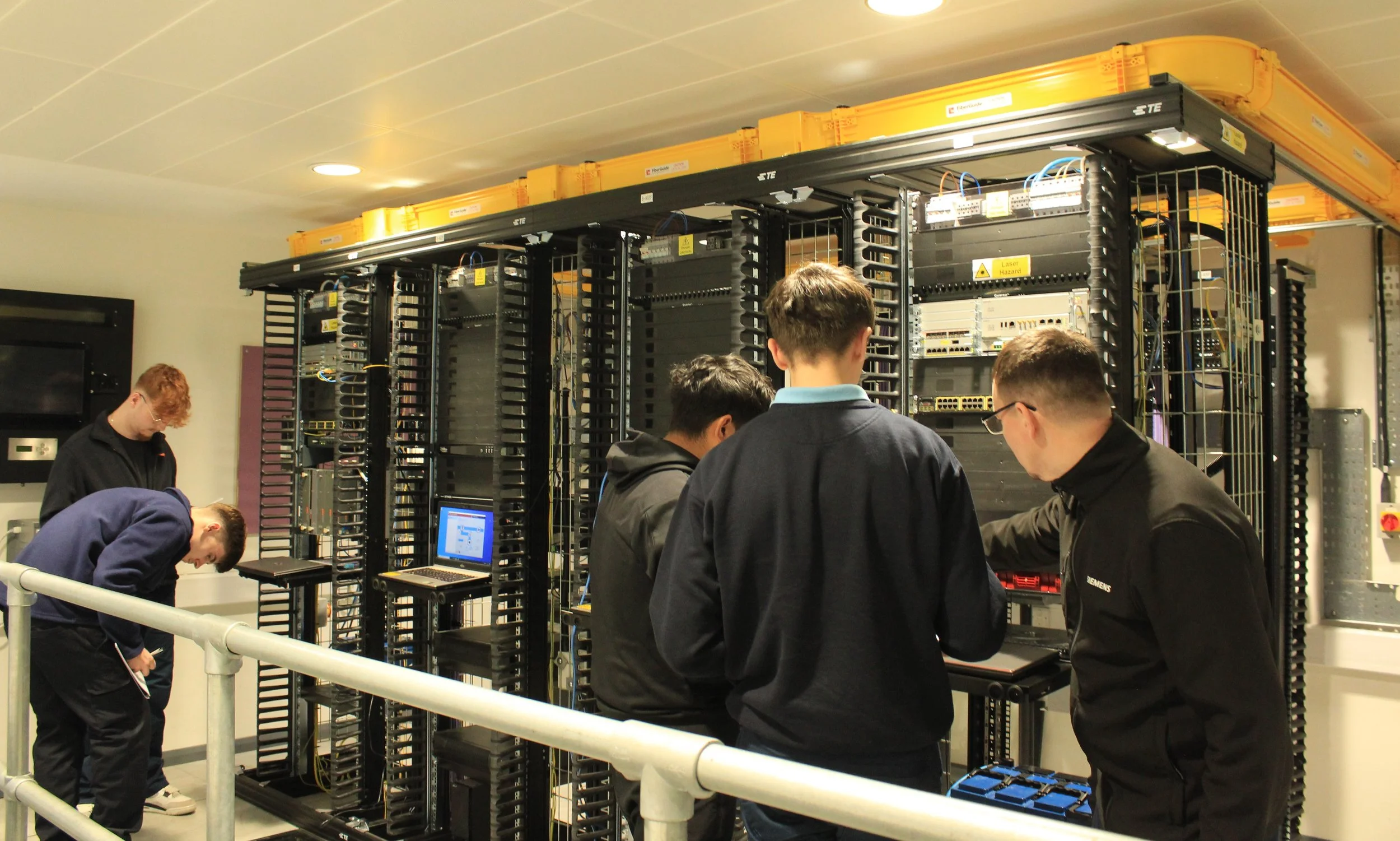
This course introduces learners to the installation, testing, and maintenance of fibre optic networks.
This course aims to introduce learners to copper cabling installation, termination, and testing.
This course aims to introduce trainees to maintenance, diagnostics and repair procedures for Telecoms power supplies.
Plan a maintenance activity
Maintain a battery pack
Maintain a rectifier
Maintain an inverter
Maintain a standalone UPS
Attendees will:
• Understand light transmission and fibre optic terminology
• Work safely with optical fibres and network components
• Prepare, join, and fusion splice fibre optic cables
• Perform standard tests and OTDR measurements on fibre systems
Attendees will:
Understand basic electrical theory with reference to data communications cabling
Work safely with copper cabling in an
internal environmentPlan installation of a copper datacoms link
Be able to install copper datacoms cabling,
in accordance with current standardsBe able to terminate copper datacoms
cablingBe able to Test FTP, UTP and multicore
copper links
Diagnose failures on battery pack
Evaluate system operation
Rectify failures on battery pack
There is much more to learn on the course but this has been a short overview of what you will learn.

432 Ribbon Fibre
432 Ribbon Fibre is the future of fibre optic telecommunication and is being implemented as part of Network Rail’s bold ‘Project Reach’ programme.
This course aims to introduce learners to 432 ribbon fibre and provide hands on learning for splicing, jointing and testing of ribbon fibre cable joints.
Build a 432-ribbon fibre joint
Theoretical training around types of Ribbon fibre
How to use ribbonising tools (Making single fibre into ribbon fibres)
How to splice ribbon fibres
Telecoms Maintenance and Failure Investigation (TMT-FIP)
Learners will be taught how to investigate failures around telecoms used on the railway and how to maintain essential telecoms equipment
Learners will understand how to follow the failure process
Learners will be taught how to use the TMT-FIP booklet for railway telecoms maintenance
OTDR Training
Students will learn how to use a OTDR (Optical Time Doman Reflectometer) to test fibre cables.
Learners will be taught what OTDR is?
How to use OTDR in testing fibre cables
How to interpret OTDR results
Fibre Optic Splicing, Termination, and Testing Unit
This course aims to introduce learners to the various fibre optic cable used within the rail industry
Work safely when working with optical fibre cables
Route armoured and double insulated super armoured cable optical fibre cables in specified work environment approved containment
Prepare optical fibre cables for jointing and termination
Use cleaving and splicing techniques for both single and multimode fibre cables
Seal and label specified work environment telecoms enclosures
Use correct specified work environment procedures for fibre testing
Prepare optical test and optical component cleaning equipment
Apply optical time domain reflectometer set up parameters for bi-directional testing and fault finding
Use optical time domain reflectometer distance markers and fault procedures

