
Level 3 Engineering Fitter
Curriculum Breakdown & Roadmap
Roadmap
Overview
“Producing complex high value, low volume components or assemblies.” - Skills England
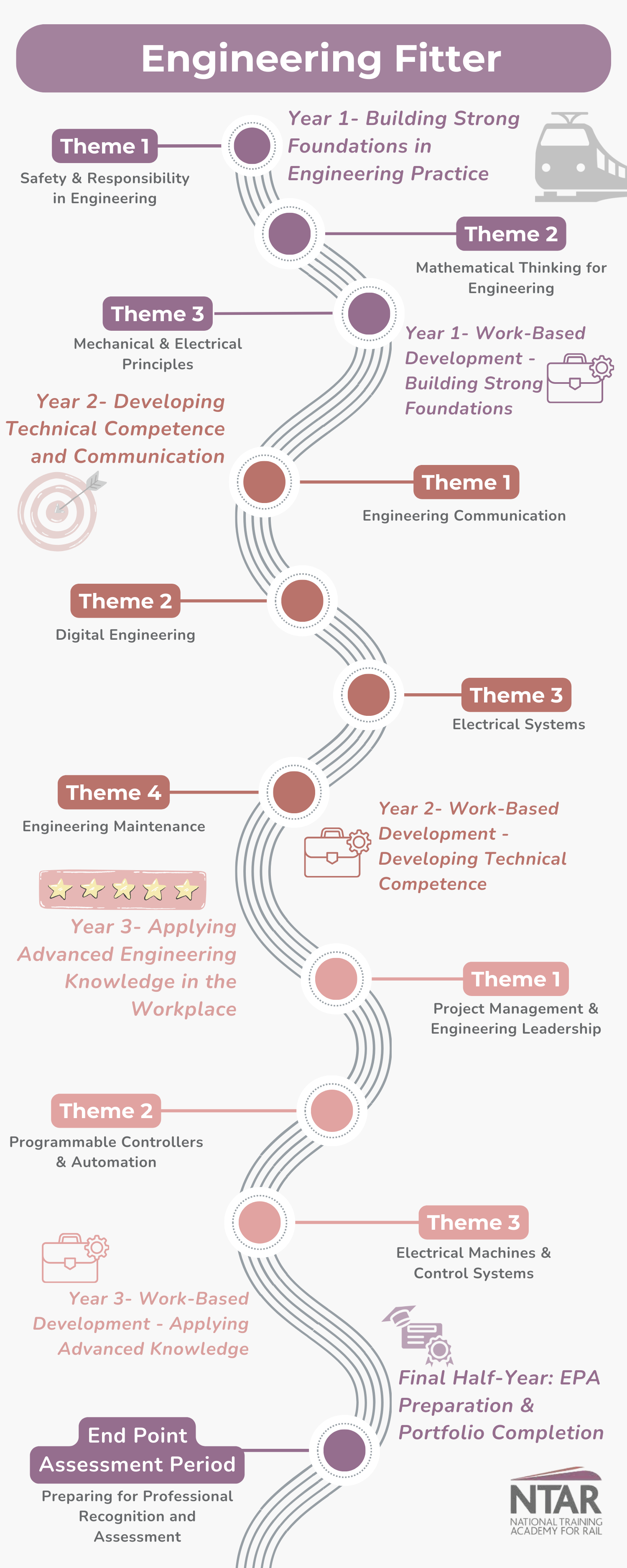
Year 1: Building Strong Foundations in Engineering Practice
In Year 1, apprentices will establish a solid foundation in core engineering principles, workplace safety, and essential technical skills. Through a blend of college-based learning and practical workplace experience, they will develop an understanding of health and safety legislation, engineering mathematics, mechanical and electrical principles, and safe working practices. This year focuses on building confidence, accuracy, and awareness in real-world engineering environments, setting the stage for more advanced tecnhical development in subsequent years.
Work-Based Development:
Year 1 is about establishing a solid foundationin core engineering principles, workplace safety, and essential technical skills. Apprentices build confidence, accuracy, and awareness in real-world engineering environments.
Year 2: Developing Technical Competence and Communication
In Year 2, apprentices deepen their technical understanding while enhancing their ability to communicate effectively in engineering contexts. They explore computer-aided design, electronic systems, and maintenance strategies, applying these skills in increasingly complex workplace scenarios. Emphasis is placed on interpreting technical information, using digital tools, and contributing to team-based problem solving, preparing apprentices for more autonomous roles in engineering environments.
Work-Based Development:
Year 2 focuses on deepening technical understanding and enhancing communication in engineering contexts. Apprentices apply skills in increasingly complex workplace scenarios, using digital tools and contributing to team-based problem solving.
Year 3: Mastery, Independence, and EPA Preparation
Year 3 challenges apprentices to apply accumulated knowledge to real-world engineering projects and systems, fostering independence, critical thinking, and readiness for professional practice.
Work-Based Development:
Year 3 challenges apprentices to apply accumulated knowledge to real-world engineering projects and systems, fostering independence, critical thinking, and readiness for professional practice.
Final Half-Year: EPA - Preparing for Professional Recognition and Assessment
The final half-year is dedicated to refining the apprentice’s portfolio and preparing for the End Point Assessment (EPA). Learners consolidate their evidence, complete mock assessments, and develop their confidence through simulated interviews and report writing. This phase ensures apprentices are fully equipped to demonstrate their competence, professionalism, and readiness for qualified technician status.
Frequently Asked Questions
-
This appprenticeship standard is set to a level three.
-
42 months (plus 6 months once into Gateway for EPA). This may be reduced if an apprentice has prior learning and has already gained relevant knowledge and skills.
-
The End-Point Assessment (EPA) will include a Project to produce a report including the evidence, a Multiple-Choice Test, and a Professional Discussion.
-
Please do not hesitate to contact: apprenticeshipprogramme@ntar.co.uk